
THREEFOLD COMMUNION
Remembering what Christ has done. Celebrating what he is doing. Looking forward to what he has promised.
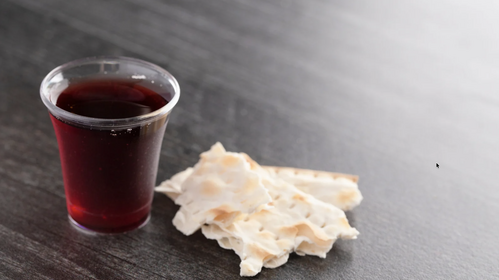
Our next Threefold Communion Service is on November 22 at Pataskala Grace Church. You can RSVP here.
At Newark Grace Church, we believe communion is more than a religious tradition. It's an opportunity to remember the gospel, examine our hearts, celebrate our unity in Christ, and look forward to his return.
You may be familiar with sharing the bread and cup during a worship service. But at Newark Grace, we also practice two additional elements: washing one another's feet and sharing a meal together.
We call this Threefold Communion.
Together, these three practices remind us of the full scope of the gospel: what Jesus has accomplished for us through his death and resurrection, how he continues to transform us through his Spirit, and the glorious future he has promised to his people.
It's a practice rooted in Scripture and shared by churches in our Charis Fellowship tradition for more than 300 years.
And while it may look different from what you've experienced before, we believe it's a beautiful opportunity to worship Jesus and grow together as his church.
Three Ways We Celebrate the Gospel
The Bread and Cup
Remembering Christ's finished work for us.
On the night before his crucifixion, Jesus took bread and a cup and instructed his disciples to remember him.
When we share the bread and cup, we remember his body given for us and his blood shed for the forgiveness of our sins.
At the heart of Christianity is the good news that Jesus lived the perfect life we could never live, died the death we deserved, and rose again so that sinners might be reconciled to God.
Our salvation is not something we earn through religious activity or good works. It is a gift of God's grace, received through faith in Jesus Christ.
The bread and cup remind us of this finished work. We come to the Lord's Table not because we have made ourselves worthy, but because Jesus is our Savior.
In theological terms, this points us toward justification: through faith in Jesus, sinners are forgiven and declared righteous before God.
Footwashing
Remembering Christ's continuing work in us.
On the night before his crucifixion, Jesus did something extraordinary.
He took a towel, knelt down, and washed his disciples' feet.
In a culture where washing feet was considered the work of a servant, Jesus—the Lord of all creation—humbled himself to serve those he loved.
But Jesus was doing more than giving his disciples a lesson in humility.
His actions also pointed toward their ongoing need for his cleansing grace.
Through faith in Christ, believers have been forgiven and made new. Yet we continue to struggle with sin and need the transforming work of the Holy Spirit.
When we wash one another's feet, we remember that Jesus has not finished working in us.
This is what Christians call sanctification: the ongoing work of God, through his Spirit, to make us more like Jesus.
Footwashing also reminds us that following Christ means loving and serving one another. We come together as people equally dependent on God's grace, called to demonstrate the same humility and sacrificial love that Jesus showed us.
The Love Feast
Looking forward to Christ's promised return.
The Christian life was never meant to be lived alone.
During Threefold Communion, we share a meal as brothers and sisters in Christ.
We enjoy fellowship, encourage one another, and celebrate the unity we share through the gospel.
But this meal points us toward something far greater than the fellowship we experience today.
Scripture tells us that one day, God's people will gather with Jesus at the marriage supper of the Lamb.
On that day, sin, suffering, and death will be no more. We will be made completely new and enjoy perfect fellowship with Christ and one another forever.
The Love Feast gives us a small glimpse of that coming celebration.
Theologically, it points us toward glorification: the future completion of God's saving work, when believers will be fully transformed and dwell with Christ forever.